






What is CNG?
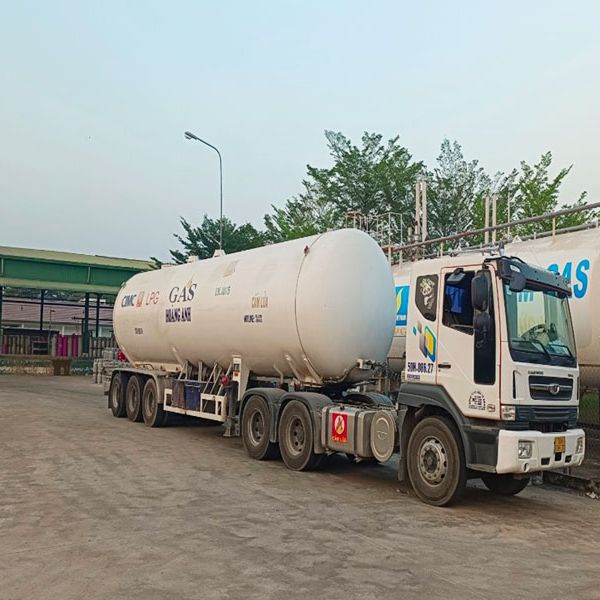
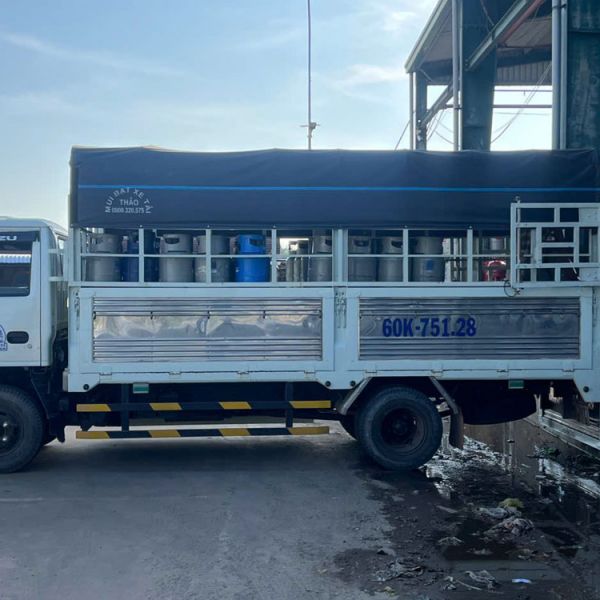
CNG (Compressed Natural Gas) is a type of natural gas whose main component is methane (up to 95% by weight), stored and compressed at high pressure, and transported in specialized vehicles.
CNG is a colorless, odorless, non-toxic, and lighter-than-air natural gas.
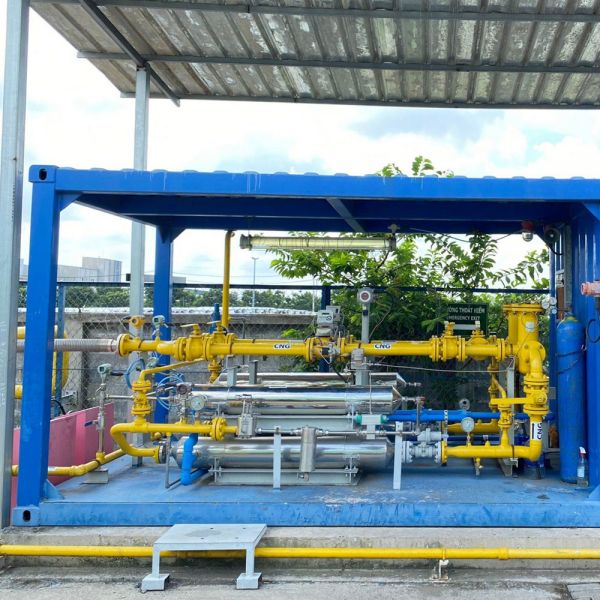
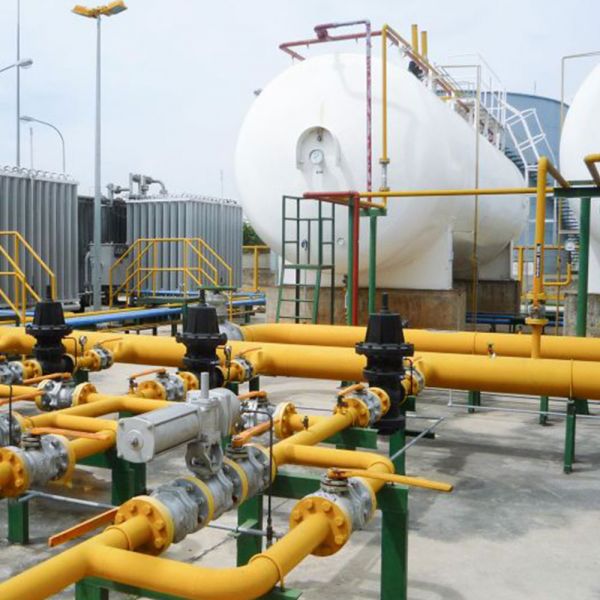
After being extracted from natural gas fields or associated gases during oil extraction, the natural gas is processed to remove impurities and heavy components, then transported via pipeline to a gas compression plant.
Some physical properties of CNG gas
| Characteristic | Unit | Gasoline and diesel | Diesel | LPG | CNG |
| Relative density | Water = 1 | 0.74 | 0.84 | 0.55 | - |
| Relative density | Air = 1 | - | - | 1.285 | 0.64 |
| Autoignition temperature | |||||
| Combustion temperature | Degrees Celsius (°C) | 360 | 280 | 374 | 540 |
| Spontaneous combustion range | % in the air | 1 – 8 | 0.6 – 5.5 | 2.2 – 9.0 | 5 – 15 |
| Flame temperature | Degrees Celsius (°C) | 2030 | 1780 | 1983 | 1954 |
| Octane rating | - | 87 | - | 93 | 130 |
Table: Some basic technical characteristics of gasoline, diesel fuel, LPG, and CNG.
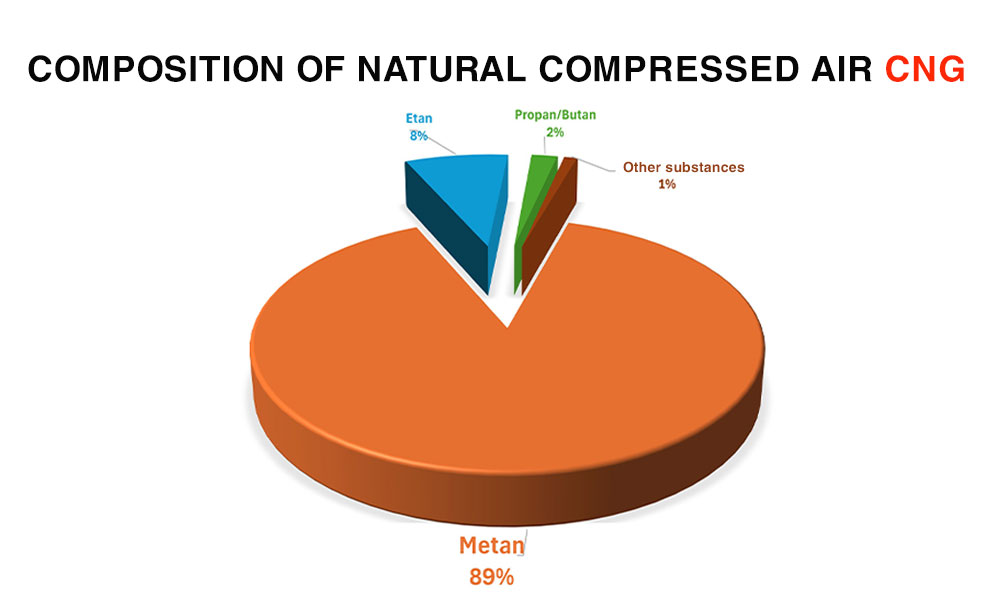
Composition of natural compressed air CNG
Applications of CNG
Compressed natural gas (CNG) has many widespread applications in various fields.
Transportation: CNG is used as fuel for cars and buses. CNG can replace gasoline and diesel, reducing polluting emissions and saving fuel costs.
Industry: Fuel for combustion in industrial, metallurgical, furnace, and electroplating industries.
Domestic: CNG is used in some households to provide fuel for cooking, heating, and other household appliances. CNG is also used in hotels, large kitchens, etc. This helps reduce energy costs and protect the environment.
Oil and Gas Industry: In the oil and gas industry, CNG is used as a fuel source for moving equipment, such as drilling rigs and oil and gas extraction equipment.
Compressed natural gas (CNG) is a comprehensive energy solution that ensures environmental friendliness, minimizes emissions with superior performance, and maximizes cost savings.