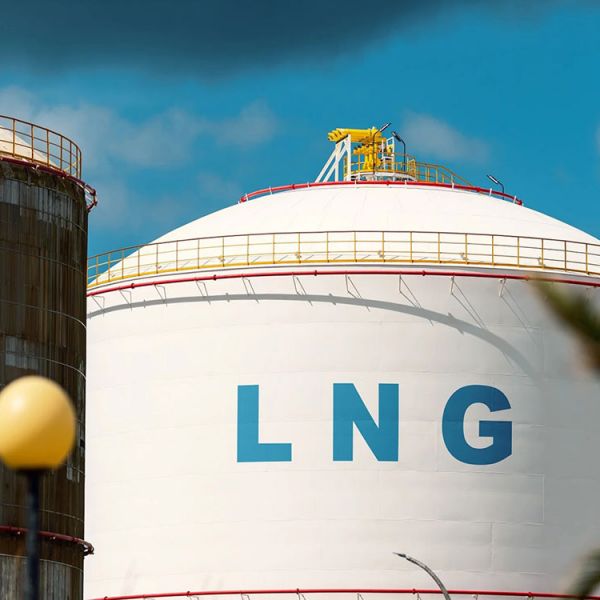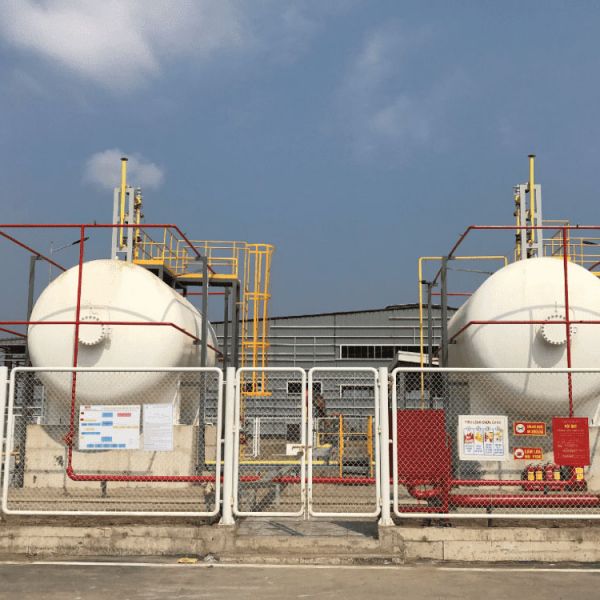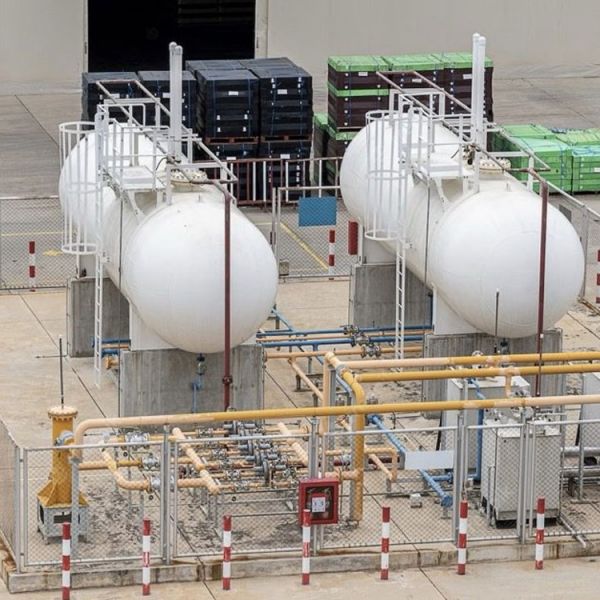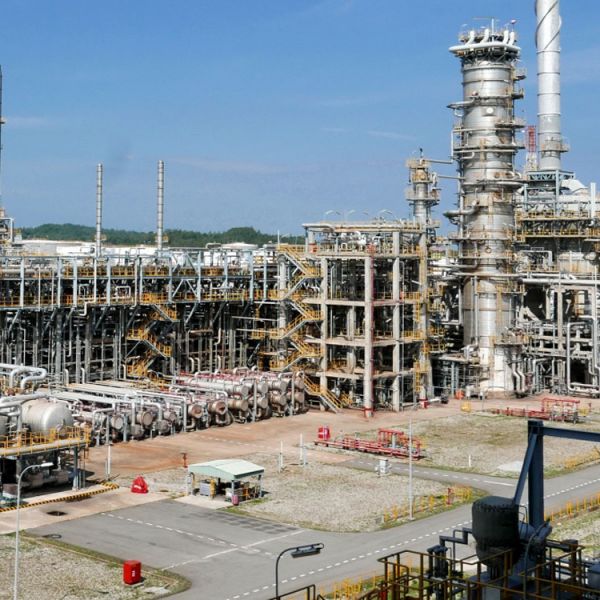






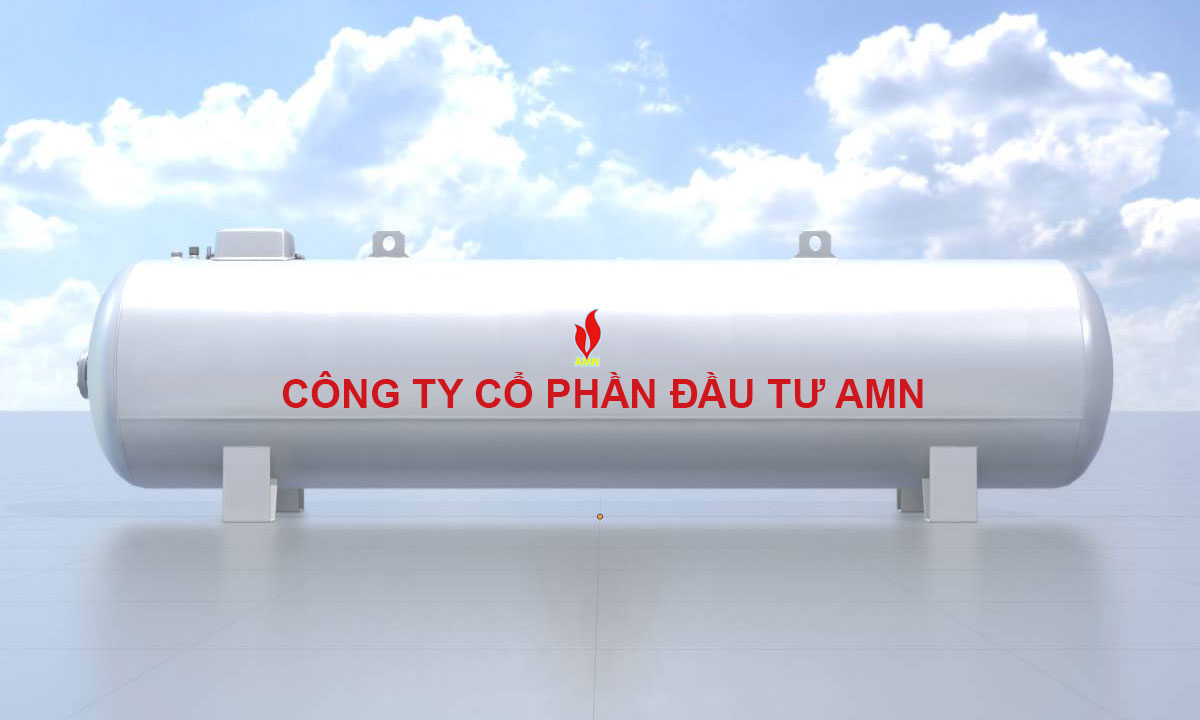


LPG storage tanks are an important and indispensable piece of equipment in the production process, providing a crucial gas source for many business activities. The versatility and advantages of this type of tank have made it increasingly popular in many industrial and household sectors.
What is an LPG storage tank?
LPG stands for Liquid Petroleum Gas, a mixture of hydrocarbon gases primarily consisting of propane (C3H8) and butane (C4H10). LPG gas is often referred to as liquefied petroleum gas and exists as a gas under normal temperature and pressure conditions. However, to ensure safety and convenience in transportation and use, LPG is usually compressed at high pressure and stored in liquefied gas tanks or containers.
LPG storage tanks (industrial gas tanks, liquefied gas tanks, or compressed gas tanks) are transfer devices used to store LPG gas. Because LPG is a highly flammable and explosive medium, its transportation and use require rigorous safety inspections. In particular, the type of liquefied gas storage tanks used are a mandatory requirement to ensure workplace safety as stipulated by the Ministry of Industry and Trade.
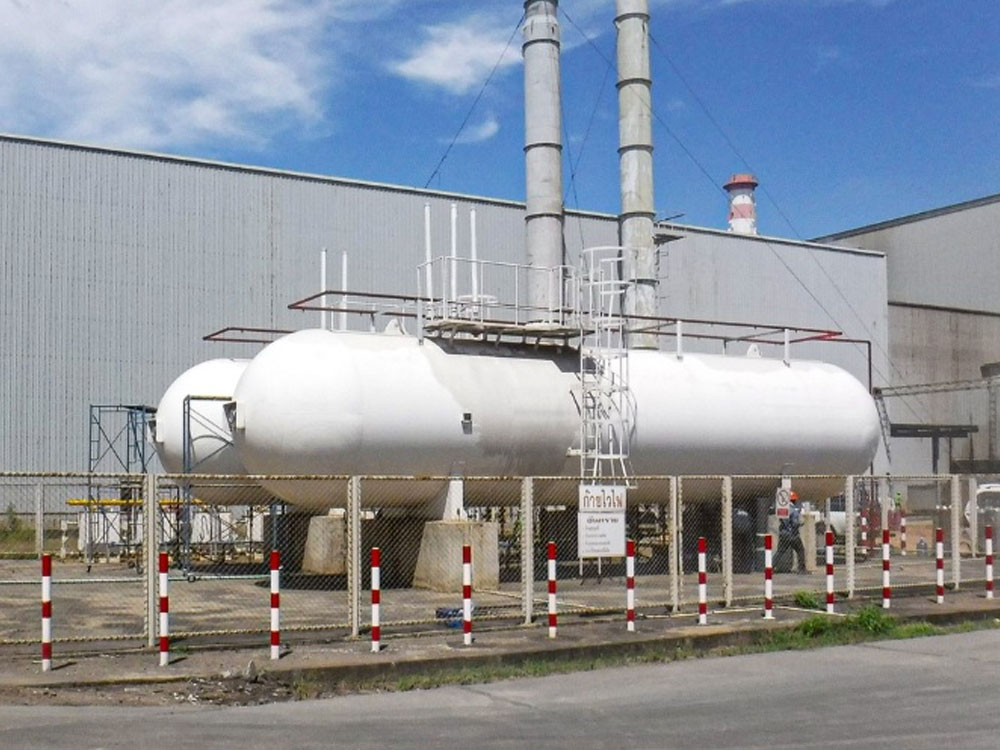
Liquefied gas storage tanks are divided into two main types based on their intended use:
Above-ground tanks.
Underground tanks.
Built tanks.
Applications of LPG Liquid Gas Storage Tanks
Industrial gas storage tanks are widely used in industries such as:
Used in handicraft production, food processing, metallurgy, and galvanizing. Additionally, they provide heat for livestock and animal husbandry in agriculture.
Provides energy for gas mixing, combustion, or metal cutting, mechanical applications, and many other industrial applications such as in the chemical, machinery, shipbuilding, and electronics industries.
Scientific research.
Production of ceramics, glass, tiles, etc.
LPG Tank Structure
LPG storage tanks consist of four main parts: the tank body, the tank lid, the venting system, and the tank base. More specifically, the tank structure includes:
Tank body: It comes in various designs such as cylindrical, square, or rectangular shapes. The outermost layer is the tank shell, followed by a vacuum layer in the middle, and finally the gas tank itself. The tank body is usually made from high-pressure resistant and heat-insulating materials such as stainless steel or aluminum alloy.
Tank lid: There are many different types of tank lids, such as flat-faced lids, dome lids, and conical lids.
Tank bottom: There are also three types: flat bottom, dome bottom, and conical bottom.
Tank base: These can be anti-twist type bases, round bases, or L-shaped bases.
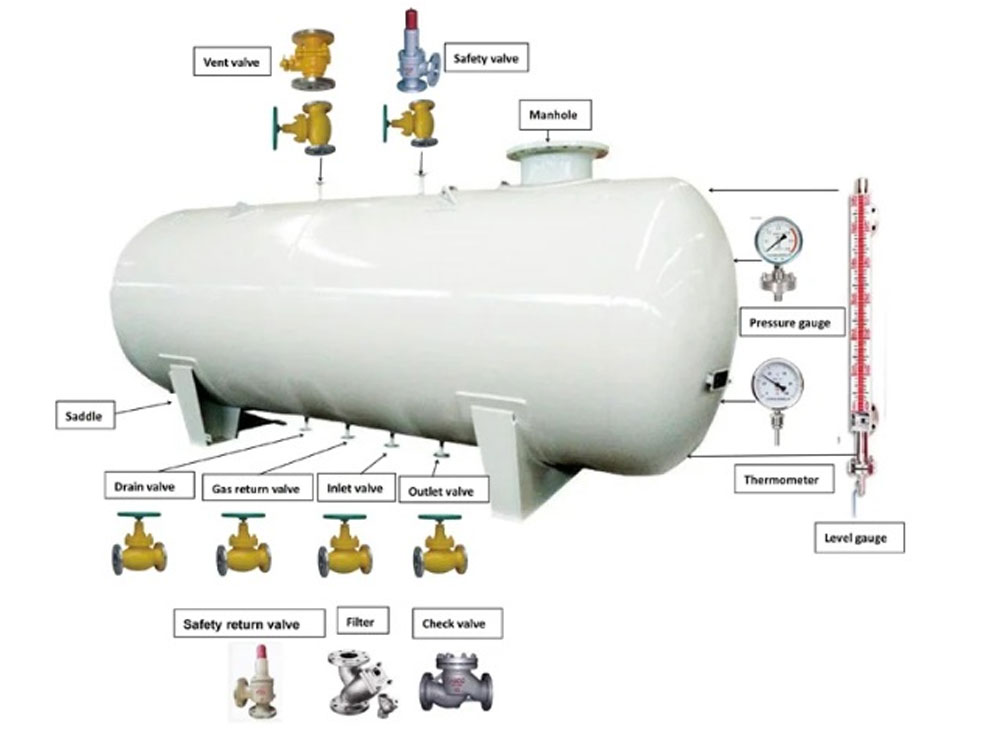
If the tank has a large capacity, it will be equipped with additional stairs for easy access. Furthermore, the tank is also equipped with a system of pipes for filling the tank with liquefied petroleum gas (LPG) and for discharging liquid or gas through the pipeline.
Technical Standards for LPG Storage Tanks
You can find information related to LPG tanks in the specific regulations of the National Technical Standard on Liquefied Petroleum Gas Storage Tanks QCVN 02:2020/BCT issued by the Ministry of Industry and Trade. In this standard, LPG tanks must meet the following general standards:
LPG tanks must be designed, manufactured, inspected, tested, and labeled according to the regulations in QCVN 02:2020/BCT and related regulations.
All equipment and accessories used directly with LPG in the tank must be specifically designed for LPG to ensure safety and efficiency.
Any tank that is dented, bulging, severely worn, or excessively corroded must be immediately decommissioned.
Repairs or modifications to tanks must comply with the regulations and standards applicable at the time of manufacture.
Equipment such as condensers or evaporators must not be installed inside LPG tanks.
Other standards may be applied to tank inspections upon request from the user or manufacturer. However, these standards must have safety technical specifications equal to or higher than those stipulated in the national regulations and standards mentioned in QCVN 02:2020/BCT.
With the information shared above by AMN, we hope you have gained a better understanding of LPG storage tanks for industrial liquefied gas and their applications in industry.